Connections / Symbols
Why Do I Like My Dog Better Than People?
We say it with a laugh. But we may have a particular afternoon—or person—in mind.
By Susan Ann Shepler · November 16, 2026 · 4 min read
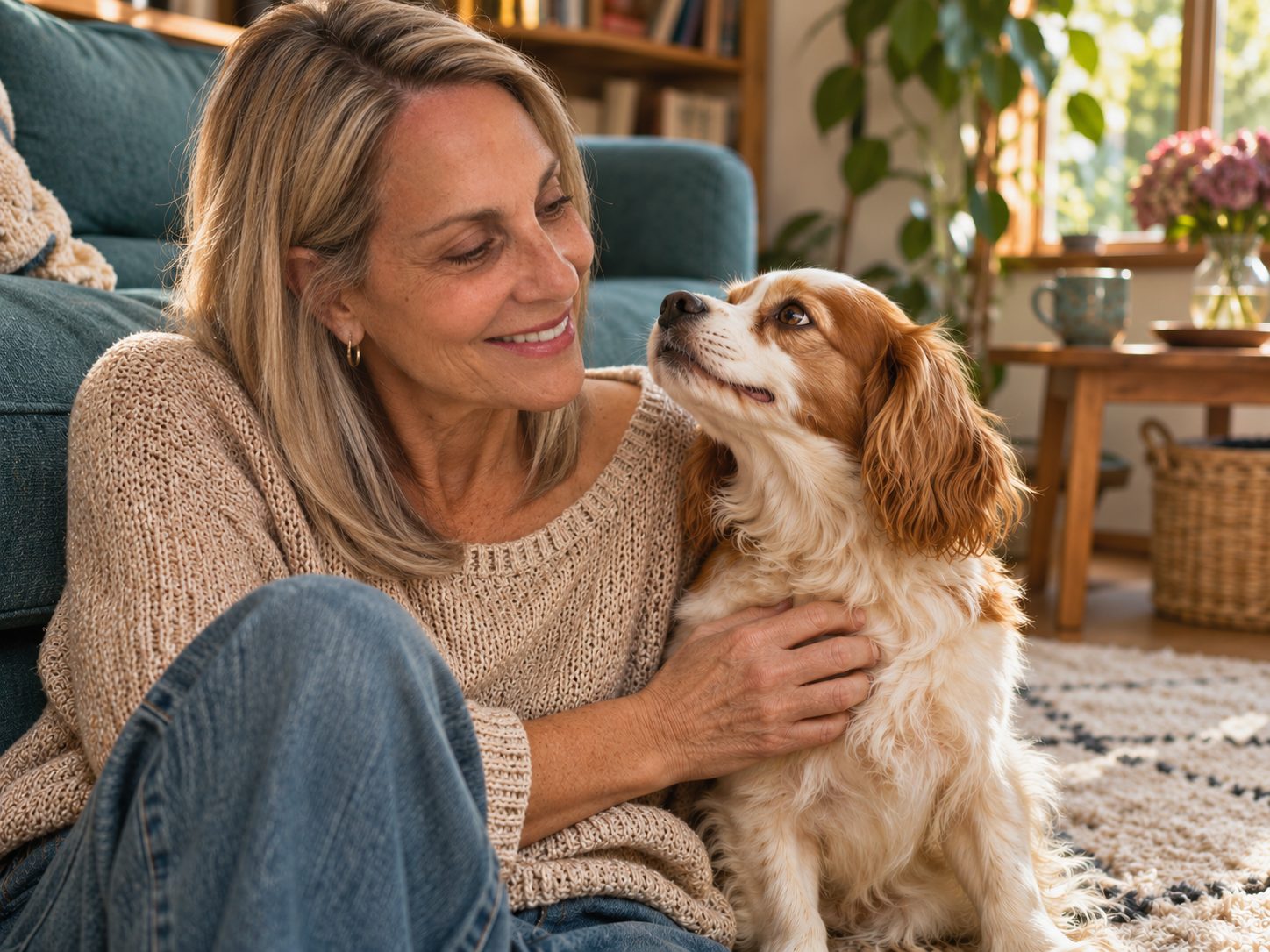
Illustration for AwakenArts.
You come home, and your dog is delighted.
You haven’t said anything clever. You haven’t accomplished anything impressive. You’re carrying groceries, your hair needs attention, and you may have spent the last twenty minutes arguing with an automated phone system.
Read more ↓
None of that seems to matter.
You’re back.
Apparently, that’s wonderful.
Later, when someone asks about your dog, you pull out your phone. Several photographs into the conversation, you hear yourself saying, “Honestly, sometimes I like my dog better than people.”
You both laugh.
What is it about that relationship that makes the statement feel so understandable?
I don’t have to explain myself
A dog can be good company when we have very little conversation left in us.
We don’t need to summarize the day or make it sound more interesting than it was. We can sit quietly. We can tell the same story again. We can talk out loud while looking for our glasses without anyone pointing out that they’re on our head.
There’s relief in that.
With people, we sometimes wonder how we’re coming across. Did that sound unkind? Am I talking too much? Should I have asked another question?
Beside a resting dog, those questions may grow quiet for a while.
We’re still responsible for another living creature, of course. The dog may need a walk precisely when we want to sit down. But we usually know what kind of attention is being requested.
The leash is a fairly direct message.
It’s nice to be someone’s favorite
There is something appealing about being greeted as though your arrival has improved the entire household.
Your dog may follow you from room to room, or settle nearby while you work, occasionally checking whether lunch might happen earlier today.
We may joke about having a little shadow. Underneath the joke is the pleasure of being sought out.
Human affection isn’t always so visible. A friend may care deeply and be distracted. Grown children have lives, responsibilities, and worries we may know little about. Someone can love us and forget to call.
A dog’s welcome is easier to notice.
That doesn’t make it a measure of who loves us most. It does help explain why it can feel so good.
We know each other’s small habits
Over time, ordinary routines become a shared language.
You recognize the look toward the door. Your dog recognizes the shoes that suggest a walk. You know which sound means “someone’s here” and which means a delivery truck has committed the offense of passing your house.
Some of your interpretations may be more accurate than others. Still, you’ve been paying attention.
That attention has a history: mornings, meals, walks, muddy feet, veterinary visits, the particular way your dog settles down for the night.
You know this creature’s habits because you live alongside them. And those familiar habits give shape to your days.
A quiet house can feel different with a dog asleep in it.
“My faithful friend”
Listen to the language we use for dogs.
Companion. Protector. Best friend. Family.
These words tell us something about the place an animal can hold in a human life. When we describe a dog as faithful, we’re also naming a quality we value: someone stays close, returns to us, and is glad we’re there.
A dog waiting by the door can become a picture of belonging.
That is how symbolic meaning can grow out of an ordinary relationship. The dog is a living animal with particular needs and habits. Yet his presence may also come to represent home, welcome, or continuity through a season of change.
When we say, “He got me through that year,” there may be a whole story inside the sentence.
And people are complicated
They are. So are we.
People misunderstand, interrupt, disappoint, and bring their own needs into the room. They can disagree with our version of events. They may need something from us when we feel we have nothing left to give.
They can also understand the story we’re trying to tell. They can share a memory, offer a different perspective, make us laugh at ourselves, or help carry a responsibility.
A dog’s companionship and a person’s friendship meet us in different ways. Loving one doesn’t require us to dismiss the other.
But our fondness for the easier relationship may reveal something worth noticing.
Perhaps we’re tired of performing. Perhaps we miss uncomplicated affection. Perhaps we’d like someone to sit beside us without immediately offering advice.
Those are useful things to recognize—and sometimes to ask for.
Meanwhile, there’s a walk to take
Your dog probably isn’t waiting for you to finish examining the meaning of companionship.
He’s waiting for you to put down the phone.
There’s a door to open, a familiar route to follow, and apparently some important news near the mailbox.
You pick up the leash. His whole body responds.
For a moment, being together is enough.
What does your dog do that makes you feel most at home?